


If you are dealing with muscle tension, stiffness, or general aches, you may be trying to decide between massage therapy and chiropractic care. Both can help you feel better, but they approach the body in different ways and are often most effective when used together. At Connected Health Centers, we offer both chiropractic care and massage therapy, and patients frequently ask us how to know which one is the right fit for their needs. This guide breaks down what each approach focuses on, how they differ, and when combining the two makes the most sense.
What Chiropractic Care Focuses On
Chiropractic care centers on the structure and alignment of your spine, joints, and nervous system. When a joint is misaligned or restricted, it can affect nearby nerves, muscles, and your overall range of motion. Chiropractic adjustments are designed to restore proper alignment and reduce the irritation that comes with it.
- Spinal adjustments using techniques like our Diversified Technique to correct misalignments
- Extremity adjustments for joints outside the spine, such as shoulders, knees, and ankles
- Postural assessments to identify patterns that may be contributing to ongoing discomfort
- Diagnostic imaging to get a clearer picture of what is happening structurally
Who Tends to Benefit Most
Because chiropractic care addresses the underlying structure of the body, it often plays a central role in treating recurring pain, not just the symptoms of it. Patients dealing with joint stiffness, nerve-related symptoms like tingling or numbness, or pain that keeps returning in the same spot tend to see the most benefit from a structure-focused approach. Chiropractic care is also frequently used alongside other treatment, such as care following an accident or an athletic injury, where structural alignment plays a direct role in recovery.
What Massage Therapy Focuses On
Massage therapy works primarily on the muscles, fascia, and soft tissue surrounding your joints and spine. Rather than targeting alignment, massage helps release tension, improve circulation, and support the body’s natural recovery process.
- Reducing muscle tightness that builds up from stress, overuse, or poor posture
- Improving circulation to support healing in areas of chronic tension
- Easing tension headaches that stem from tight neck and shoulder muscles
- Supporting relaxation, which can reduce the overall stress your body is carrying
Who Tends to Benefit Most
Many patients find that massage therapy complements chiropractic care especially well, since loosening tight muscles can make adjustments more comfortable and effective. People whose discomfort is mostly muscular, or who are dealing with stress-related tension rather than a specific joint issue, often notice faster relief from massage-focused sessions. It is also a popular option for anyone looking for a proactive way to manage everyday tension before it turns into something more significant.
Key Differences Between the Two
While both services aim to reduce pain and improve how your body feels, the paths they take to get there are different. Chiropractic care tends to focus on joints, alignment, and nervous system function, while massage therapy focuses on the soft tissue that surrounds those structures.
- Goal: chiropractic care targets structural alignment; massage therapy targets muscle tension and relaxation
- Technique: chiropractic uses targeted adjustments, sometimes paired with Active Release for soft tissue restrictions; massage uses broader hands-on manipulation of muscle tissue
- Typical use: chiropractic care is often used for joint pain, misalignment, or nerve-related symptoms, while massage is often used for muscle tightness, stress, or recovery support
- Session frequency: chiropractic plans are often structured around a specific recovery timeline, while massage can be used more flexibly as an ongoing wellness tool
Neither approach is inherently better than the other. The right choice depends on what is actually causing your discomfort, which is something a proper evaluation can help clarify. If you are unsure where to start, a chiropractic evaluation is a reasonable default, since it gives our team a fuller picture of both your structural alignment and any soft tissue tension that may be contributing to how you feel.
When They Work Best Together
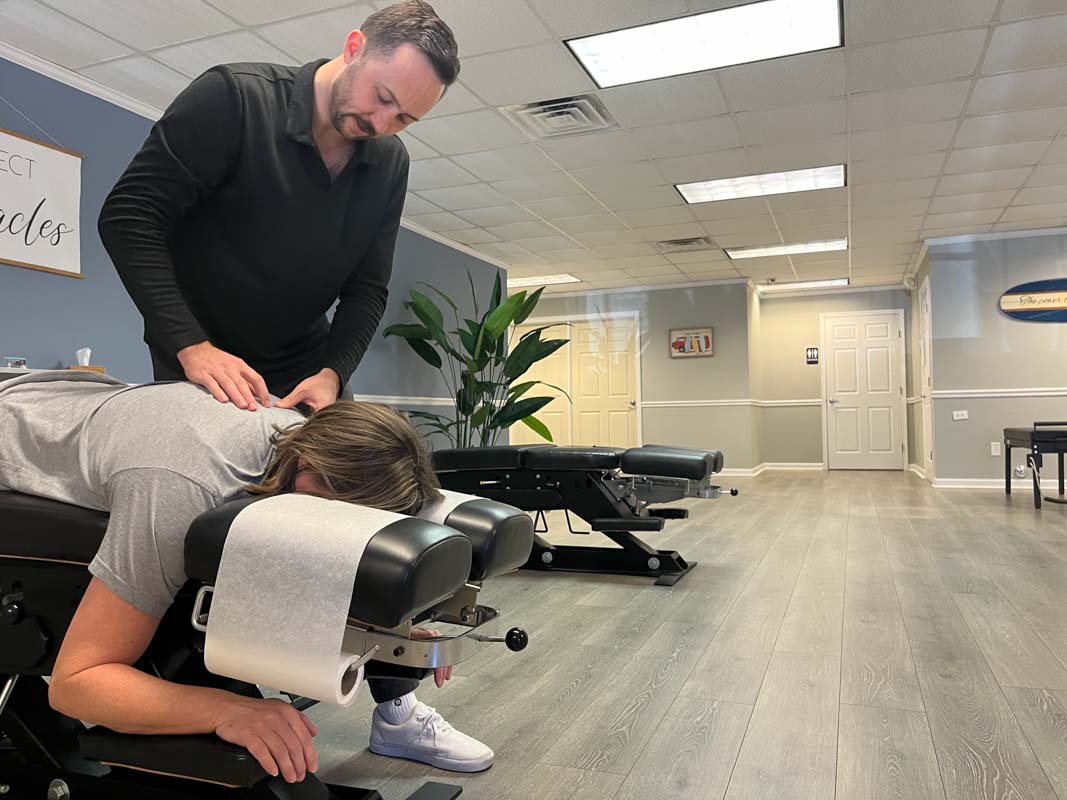 For many patients, the most effective approach is not choosing one over the other, but using both as part of a coordinated plan. If tight muscles are pulling your spine or joints out of proper alignment, massage therapy can help loosen those muscles so chiropractic adjustments hold better and feel more comfortable. Likewise, addressing alignment issues with chiropractic care can reduce the recurring muscle tension that would otherwise keep bringing you back to square one.
Building a Plan That Fits You
Our team can help you figure out the right balance between the two based on your specific symptoms and goals. Some patients benefit from alternating between services, while others use massage as a supportive addition to a primarily chiropractic-focused plan. There is no single right formula, which is why a personalized evaluation matters more than following a generic routine. Your plan can also evolve over time as your body responds to care, shifting emphasis from one service to the other as needed. It is also common for the balance between the two to change with the seasons or with changes in activity level, so a plan that made sense a few months ago may need to be adjusted as your circumstances change.
Quick Comparison Checklist
Not sure which service to start with? Consider the following:
- If you are dealing with joint pain, misalignment, or nerve-related symptoms, chiropractic care is likely the better starting point
- If your main issue is muscle tightness, stress, or general tension, massage therapy may offer faster relief
- If you have both structural and soft tissue concerns, combining the two often produces the best results
- When in doubt, a chiropractic evaluation can help identify which approach, or combination of approaches, fits your situation
- If you are recovering from an accident or an athletic injury, a combined plan is often more effective than either service alone
- If your goal is general wellness and stress relief rather than addressing a specific issue, regular massage therapy may be all you need
Ultimately, the best way to know for certain is to have a conversation with your provider about what you are experiencing. A short evaluation can save you from guessing and help you get started with the service, or combination of services, most likely to help. If you split time between an active lifestyle and long hours at a desk, a rotating schedule that includes both services often ends up being the most sustainable long-term approach.
What a Typical Session Looks Like
Knowing what to expect from each type of session can also help you decide where to start. A chiropractic visit generally begins with a conversation about your symptoms, followed by a physical exam and, if needed, diagnostic imaging. From there, your chiropractor performs targeted adjustments to the areas identified as misaligned or restricted. Sessions are typically shorter and focused specifically on problem areas.
A massage therapy session tends to be more time-focused, with a broader emphasis on the muscles and soft tissue throughout a particular region of the body, such as the neck, shoulders, and upper back, or the lower back and hips. Rather than targeting a single joint, massage therapy generally works through the surrounding muscle groups to release built-up tension. Many patients find massage sessions more relaxing overall, while chiropractic sessions tend to feel more clinical and targeted.
Neither type of session should leave you feeling worse afterward. Some patients experience mild soreness after a deep massage or a new adjustment, similar to how muscles can feel after a workout, but this typically resolves within a day or so. If discomfort lingers longer than that or feels more intense than expected, it is worth letting your provider know so your plan can be adjusted.
Frequently Asked Questions
Can I get massage therapy without chiropractic care?
Yes. Massage therapy can be used on its own as a way to manage stress, muscle tightness, or general tension, even if you are not currently receiving chiropractic care. Many patients use it as a standalone wellness service.
Do I need to see a chiropractor before scheduling a massage?
Not necessarily, though an initial evaluation can help us understand whether your discomfort is more muscular or more structural in nature. That information can help guide which service, or combination of services, is likely to help you the most.
How do I know if my pain is muscular or structural?
This can be difficult to tell on your own, since muscle tension and joint misalignment often produce similar symptoms. A chiropractic evaluation, which may include a physical exam and diagnostic imaging, is typically the most reliable way to identify the underlying cause.
Can massage therapy make chiropractic adjustments more effective?
Often, yes. Tight muscles can pull joints out of alignment or make it harder for adjustments to hold. Loosening those muscles beforehand can make adjustments more comfortable and help the results last longer.
How long before I notice a difference?
This varies depending on how long you have been dealing with your symptoms and what is causing them. Some patients feel noticeably better after a single massage or adjustment, while others need a series of visits before seeing lasting improvement. Chronic issues that have built up over months or years generally take longer to resolve than a recent strain or bout of tension.
Is one service more expensive than the other?
Pricing can vary depending on the type of session and how it fits into your overall care plan. Rather than comparing cost in isolation, it is usually more helpful to think about which service, or combination of services, is most likely to address what is actually bothering you. Our team can walk you through your options during your initial visit. In many cases, a combined plan ends up being more cost-effective in the long run than repeatedly paying for one service that only partially addresses the problem.
Experience Both with Our New Patient Special
You do not have to guess which service is right for you. Our team at Connected Health Centers can evaluate your symptoms and recommend a plan that may include chiropractic care, massage therapy, or a combination of both. Find a Connected Health Centers location near you and take advantage of our New Patient Special to get started on a plan built around what your body actually needs.

Looking for expert advice? Contact us today!
Experience personalized chiropractic care at Connected Health Centers, where we’re dedicated to optimizing your health and wellness. Let us help you reconnect with your family, your life, and your well-being.
Like this article? Spread the word!
Related Posts

Chiropractic Adjustments vs. Physical Therapy: What Cedar Park, TX Residents Should Know
Wondering whether chiropractic adjustments or physical therapy is right for you? Learn…

Hutto, TX Residents: Unlock Pain-Free Movement Through Connected Health Centers’ Expert Extremity Adjustment Care
Hutto, TX residents, unlock pain-free movement with expert extremity adjustment care at…

Why Phoenix Patients Choose Connected Health Centers for Postural Correction Chiropractic Care
Discover why Phoenix patients trust Connected Health Centers for postural correction…